Bespoke Kitchen Cost Vs Fitted Kitchen Cost: Understanding the Differences
Bespoke kitchen cost is usually higher than fitted kitchen cost, but the difference is not as simple as “standard” versus “luxury”. A well-designed fitted kitchen can be attractive, practical and durable. Bespoke kitchen design simply provides more freedom over how the room looks, fits and functions.
For homeowners comparing the two, it is important to understand what is included in each quotation rather than judging the kitchens on their headline prices alone.
Quick Summary
A fitted kitchen normally uses established cabinet sizes, finishes and layouts, helping to make its design and manufacture more efficient. A bespoke kitchen is created around the room, with greater flexibility over dimensions, materials, storage and detailing.
The higher cost generally reflects additional design work, made-to-measure cabinetry, specialist finishes and careful installation when handling a high quality kitchen renovation.
Bespoke Kitchens and Fitted Kitchens: What Is the Difference?
Most fitted kitchens are assembled from an established range of cabinet sizes, door styles, colours and internal options. A kitchen designer combines those elements to suit the room as closely as possible.
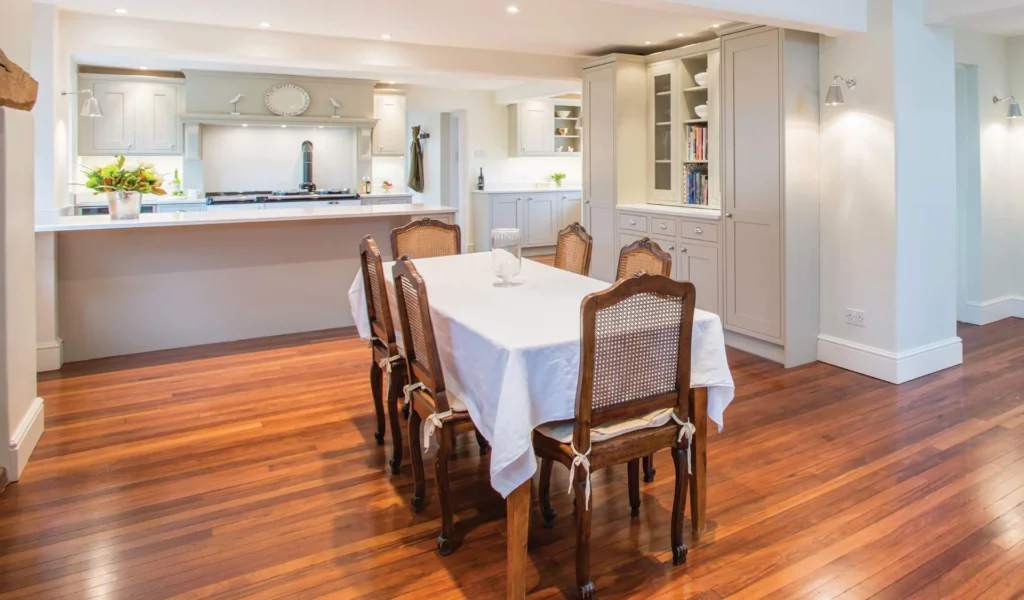
A bespoke kitchen starts with fewer restrictions. Cabinets can be adjusted in width, height and depth, while awkward corners, chimney breasts, uneven walls and unusual ceiling heights can be incorporated into the design.
The basic purpose of a kitchen cabinet remains the same in either case. The difference lies in how precisely the cabinetry can be adapted to the property and the people using it.
That does not make fitted kitchens inferior. In a straightforward room, a high quality fitted range may provide everything needed. Bespoke design becomes more valuable when standard components cannot use the available space neatly.
| Area | Fitted Kitchen | Bespoke Kitchen |
| Cabinet sizes | Usually based on set dimensions | Made to suit the room |
| Finishes | Chosen from an existing range | Greater freedom over colour and material |
| Storage | Standard configurations | Designed around particular items and routines |
| Layout | Built around available units | Developed around the household and space |
What Affects Bespoke Kitchen Cost?
There is no single average cost that applies to every bespoke kitchen. A compact design with simple painted cabinetry may cost less than a large fitted kitchen containing premium appliances, extensive stonework and significant building alterations.
The main influences include:
- The number and complexity of the kitchen cabinets
- Timber, veneer, painted or specialist finishes
- The chosen cabinets and worktops
- Internal drawers, larders and storage systems
- Appliance supply and integration
- Plumbing, electrics and building work
- Delivery and installation
The scope of materials and labour should always be checked carefully. One quotation may cover cabinetry alone, while another includes worktops, fitting, appliances and project management.
Guidance from Which? on kitchen costs also highlights how installation, materials, preliminary work and wider renovation requirements can influence the complete budget.
What Are You Paying More For?
Greater Design Flexibility
A bespoke kitchen designer is not limited to filling a wall with the closest combination of standard units. Cabinet proportions can be altered to use the full height of the room, create better balance or avoid narrow filler panels.
This can be particularly useful in older properties around Haywards Heath, where walls, floors and corners are not always perfectly square.
Designed Around Everyday Use
The design service should consider how the kitchen will work from day to day. This may include:
- Positioning food storage close to preparation areas
- Creating drawers for particular cookware
- Adjusting appliance heights for easier use
- Building storage around awkward features
- Planning an island around seating and circulation
Individually, these may appear to be small choices. Together, they can make the kitchen noticeably easier to use.
More Choice Over Materials and Finish
A premium fitted kitchen can still achieve an excellent finish. Bespoke design simply provides more control over the details.
You may choose a particular timber, custom paint colour, unusual door proportion or cabinetry designed to match existing architectural features. Precise gaps, aligned doors and considered transitions between cabinets and worktops all contribute to the finished result.
Purposeful Storage
Storage is also about more than fitting as many cupboards as possible into the room. It should place frequently used items where they are easy to reach while keeping worktops clear.
The 2026 UK Houzz Kitchen Trends Study reflects the growing interest in specialist built-in features such as pantry storage, appliance cupboards and other purpose-designed additions.
Closer Installation and Design Support
Even excellent cabinetry can be undermined by poor fitting. Installation quality affects door alignment, appliance positioning, worktop joints and how convincingly the kitchen sits within the room.
With a design-led bespoke service, the designer, manufacturer and fitting team work towards the same agreed plan. This reduces misunderstandings and helps resolve potential issues before they become expensive mistakes.
Is a Bespoke Kitchen Worth the Cost?
A bespoke kitchen may be the better option when:
- The room has unusual dimensions or awkward features
- Standard units would waste valuable space
- You want a specific material, colour or architectural style
- Storage needs to be tailored to your household
- You expect the kitchen to remain in place for many years
- You value ongoing design advice and project oversight
A fitted kitchen may make more sense where the room is straightforward, an existing range already suits your taste or the budget needs to remain firmly controlled.
The fairest comparison is not simply the number of units. It is the complete package: design, materials, manufacture, installation, support and expected longevity.
Discuss Your Kitchen With Hamilton Stone Design
The most reliable way to understand your likely bespoke kitchen cost is to begin with a design appointment rather than a general price list.
At Hamilton Stone Design, we develop kitchens around the property, available space and people who will use it. Our service covers design, supply, installation and the details required to create a coherent finished room.
View our recent kitchen projects or book a design appointment to discuss your home.
If you liked this, you may also like: How Much Does a New Kitchen Cost?
Frequently Asked Questions About Bespoke Kitchen Cost vs Fitted Kitchen Cost
How much does a bespoke kitchen cost?
The cost depends on the size of the room, the cabinetry, materials, worktops, appliances and installation involved. A design appointment is usually needed before an accurate quotation can be prepared.
Is a bespoke kitchen more expensive than a fitted kitchen?
It generally is because the cabinetry is designed and made around the individual room. The additional cost also reflects greater design input, more material choices and a more involved installation process.
What is included in a bespoke kitchen quotation?
This varies between companies, so it is important to check carefully. A quotation may include cabinetry, worktops, appliances, delivery and fitting, while building work, decorating or electrical changes may be priced separately.
Can a fitted kitchen still be high quality?
Yes. A fitted kitchen can use durable materials, premium appliances and excellent workmanship. The main difference is that it is usually designed around an established collection of cabinet sizes and finishes.
How long should a bespoke kitchen last?
A high quality bespoke kitchen can remain in place for many years when it is properly designed, manufactured and installed. Durable hinges, runners, finishes and worktops all contribute to its longevity.
Does a bespoke kitchen add value to a home?
A well-planned kitchen can make a property more appealing, particularly when it suits the style and proportions of the home. However, the value also comes from having a room that works better for the current household.
Can bespoke cabinets fit awkward kitchen spaces?
Yes. Cabinets can be made around sloping ceilings, chimney breasts, uneven walls and unusual room dimensions. This often reduces wasted space and avoids relying heavily on filler panels.
Are worktops included in bespoke kitchen cost?
They may be included, but this should never be assumed. Natural stone, quartz, timber and porcelain worktops can vary significantly in price depending on the material, thickness, cut-outs and installation requirements.
Do I need a kitchen designer for a bespoke kitchen?
A kitchen designer helps turn your practical requirements into a workable layout. They can also advise on storage, materials, appliance positions, lighting and the details that are difficult to resolve once installation has begun.
What happens during a kitchen design appointment?
The designer will usually discuss how you use the room, what you want to change and the budget you are working with. Measurements, layout ideas, materials and possible building work can then be explored before the design is developed further.