Freestanding vs Integrated Appliances: Which Is Better?
When designing a new kitchen that fits you and your lifestyle, appliance choices can matter a lot. How often you use them and how much storage you need can affect whether freestanding or integrated appliances are the better option for your space.
Neither solution is universally better than the other; it depends on the individual kitchen and person. The right choice depends on the appliance, the kitchen style, the budget, and how easily you may want to change things down the line.
The Main Differences
| Consideration: | Integrated | Freestanding |
| Appearance | Blends with cabinetry | Appliance remains visible |
| Flexibility | More tied to cabinetry | Easier to change |
| Replacement | Needs compatible dimensions | Generally more straightforward |
| Design | Cohesive | More visual contrast |
| Access | Can depend on cabinetry | Appliance generally accessible |
| Space | Potentially more countertop space | Potentially more cupboard space |
Fridge Freezers
A fridge freezer may be one of the most debated items, as freestanding vs integrated appliances can work best in different kitchens. It is one of the biggest objects to hide within the cabinetry, or the biggest feature in the room, so there is a clear choice to make.
When the fridge freezer is behind the cabinetry, the kitchen cabinetry looks more continuous. It can create a sleek, contemporary design that feels clutter-free. However, it may have less internal capacity than its free-standing rival and replacement or repair options may be more limited.
You can avoid this by noting the exact dimensions and model number you used, so you can find a replacement or upgrade easily in the future.
A popular option for the freestanding fridge is an American-style option, which is often the bold statement piece we love. Match it with a cohesive range cooker and the whole kitchen looks ready to go and stylish, not to mention the ease of finding replacements or making changes in the future.
Dishwashers
A dishwasher is probably the easiest candidate to integrate into a kitchen design. You can easily hide it behind a simple cupboard door or a panel that folds down with the machine as it opens. This is a great option for maintaining continuous cabinetry without losing the convenience of a dishwasher.
When considering replacement options in the future, choose a model with standard dimensions so you can easily swap it out if needed. That will ensure an easy fit into the existing space.
Ovens
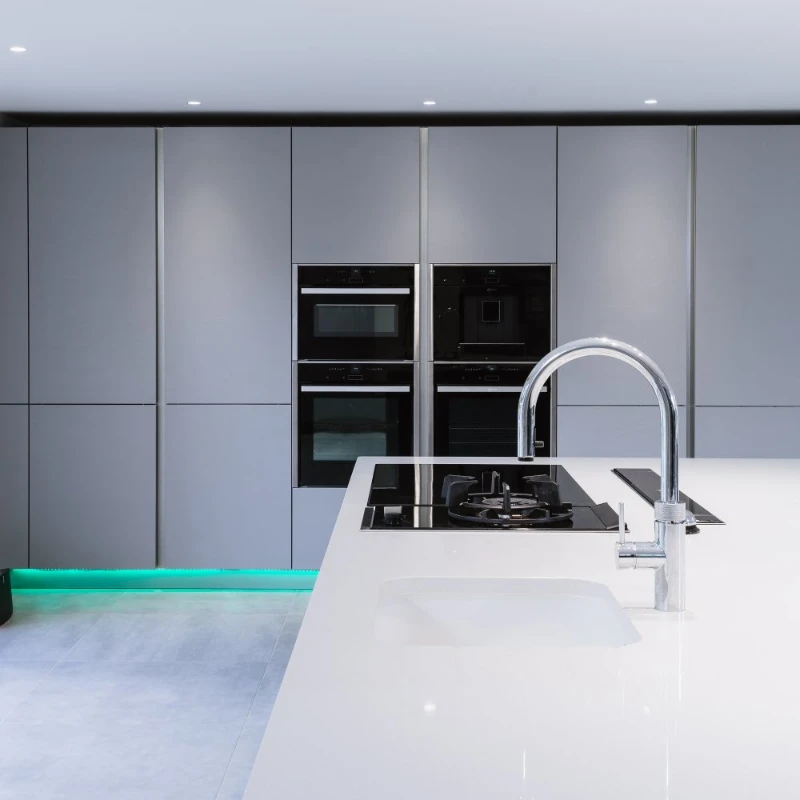
Ovens are a great choice for a built-in design. We discussed the difference between integrated and built-in in our last blog post, Integrated Appliances: Are they worth it in a new kitchen?. This distinction means ovens are often still visible, but securely built into the cabinetry and seamlessly suited to the kitchen design.
Oven options include single and double units, depending on how much you use them in your kitchen. Considerations like eye-level positioning can make a big visual difference, and finishes can match the cabinetry closely for a cohesive look or contrast it for a bold statement. It can also help ergonomically by avoiding the need to bend down all the time.
Your oven choice can affect the cabinetry, so it is best to finalise it before the cabinetry to avoid issues. The cabinetry supporting the oven needs reinforcement; this can be done with heavy-duty internal platforms or metal bracing to support the weight of a high-capacity appliance safely. You also need specific air gaps for thermal expansion. Without these considerations, the wood could warp, or finishes could be damaged.
Microwaves
Microwaves can be the most visually awkward appliance in a kitchen, but they are often necessary. Integrating them at eye level can be a great option to maintain cabinetry flow and still be easy to use daily. A built-in option is often more visually appealing than a freestanding one with wires that can clutter a countertop, especially when space is limited.
Microwaves offer plenty of options and come in a range of shapes and sizes to suit different needs. A ‘garage’ for the appliance is a great idea because you can reveal it and use it alongside other small appliances, then quickly hide it out of view for a clutter-free look.
Which Appliances Should You Integrate?
While we’ve looked at a few appliances that work well as integrated and freestanding units, some are easier than others, such as the dishwasher. Whether you want something sleek or visually bold is an important question to ask yourself when you are considering items such as the fridge and oven.
When Freestanding Makes More Sense
Freestanding appliances offer flexibility that integrated appliances don’t, so if you like frequent kitchen changes or replace appliances often due to heavy use, they may be a better option.
Another reason is wanting an interesting statement piece, like a large fridge freezer or a beautiful range cooker; these can easily be the spotlight of the room and definitely do not need to be hidden away. However, with a gorgeous statement stove, you may not want a modern dishwasher on show nearby, so integrating some appliances around the others could be a strategy to create the perfectly thought-out space you want.
A kitchen can absolutely mix integrated and freestanding appliances deliberately for a visually appealing result. At Hamilton Stone Design, we can help you on that journey to planning and creating your perfect kitchen space.
If you enjoyed this post, you may like Integrated Appliances: Are they worth it?
Freestanding vs Integrated Appliances FAQs
What is the difference between freestanding and integrated appliances?
Freestanding appliances remain visible within the kitchen, while integrated appliances are designed to sit within the cabinetry, often behind a matching door or panel. Integrated appliances create a more cohesive look, while freestanding options generally offer greater flexibility when replacing or changing appliances.
Are integrated appliances better than freestanding appliances?
Neither option is universally better. The right choice depends on your kitchen design, the appliance you choose, your budget, how you use the kitchen, and how easily you may want to replace appliances in the future.
Which kitchen appliances are best integrated?
Dishwashers are particularly well suited to integration, as they can be concealed behind a cupboard door without losing their everyday convenience. Ovens and microwaves can also work well as integrated or built-in appliances, depending on the kitchen design.
Are integrated fridge freezers smaller than freestanding ones?
Integrated fridge freezers can have less internal capacity than some freestanding alternatives because of the space available within the cabinetry. However, the right choice depends on the specific appliance and your kitchen’s storage needs.
Are integrated appliances harder to replace?
Integrated appliances can require more planning when they need replacing because the new appliance needs to be compatible with the existing cabinetry and available dimensions. Keeping a record of the appliance model and exact dimensions can make future replacements easier.
Can you mix freestanding and integrated appliances?
Yes. A kitchen does not have to use either entirely freestanding or entirely integrated appliances. Combining the two can create a considered design, such as using a statement freestanding fridge freezer alongside an integrated dishwasher.
Are freestanding appliances easier to replace?
Generally, freestanding appliances offer more flexibility when it comes to replacement because they are less tied to the dimensions and layout of the kitchen cabinetry. This can be particularly useful if appliances are likely to be replaced regularly.
Can a microwave be integrated into a kitchen?
Yes. An integrated or built-in microwave can help keep worktops clear and maintain a more continuous cabinetry design. A dedicated appliance ‘garage’ can also provide a convenient place for a microwave or other small appliances while keeping them hidden when not in use.
Should you choose your oven before your kitchen cabinets?
Yes. The oven choice can affect the surrounding cabinetry, so finalise the appliance before designing the cabinetry. The supporting cabinetry may also need reinforcement and appropriate air gaps to accommodate the oven and manage heat safely.
Can freestanding appliances be used in a modern kitchen?
Absolutely. Freestanding appliances can work well in both traditional and contemporary kitchens. A large fridge freezer or range cooker can become a deliberate statement feature. At the same time, you can integrate other appliances to balance visual impact with a cohesive overall design.